Chief Clinical Officer | First Step Recovery Centers
What drives one person to lead a positive and prosocial life and another person to lead a life of crime? It’s a question that has always fascinated Michele Squires ’02.
Mount Mercy University’s criminal justice major stands out for its strong reputation and long history as one of few schools in the Midwest to offer a four-year criminal justice program.
Mount Mercy’s accomplished faculty prepare future community leaders by blending classroom learning with practical experience through guest speakers, field trips, and internships. Students studying criminal justice will be ready for a career in corrections, criminal investigation, policing, or juvenile justice.
Students are introduced to evidence-based practices and are prepared to take on employer demands for critical thinkers, effective communicators, and ethical decision makers—all of which are vital to being competitive in today’s marketplace.
The research methods I learned and the exposure I had to current issues and practices in my field assisted me in determining best practices for the police department to better serve the community.

Chief Clinical Officer | First Step Recovery Centers
What drives one person to lead a positive and prosocial life and another person to lead a life of crime? It’s a question that has always fascinated Michele Squires ’02.
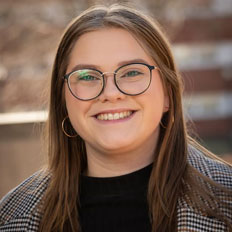
Center for State Policy and Leadership Graduate Assistant | University of Illinois Springfield
Emma Lantz ’22 saw during her college experience that students have a voice, which was a position she would advocate during her tenure as Student Government Association President.

MSL, Criminal Justice
Jacob Perks ’21, ’23 MSL found opportunities to give back to his community on the Hill, and to the larger community of Cedar Rapids.
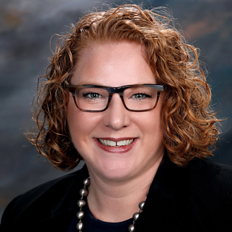
Criminal Justice, English
Hon. Kim (Rodgers) Smith ’00 came to Mount Mercy University with a goal of becoming a lawyer.

Criminal Justice
Denise Brotherton used skills she learned from Mount Mercy to defy expectations by becoming the first woman in the ICPD to be a lieutenant and captain.

Criminal Justice
Dawn Schott ’92, ’16 MA, has worked at the juvenile center after graduating from MMU with her bachelor’s degree in criminal justice.

Criminal Justice
From Chicago to Cedar Rapids, Marlan “LO” Dixon persevered through adversity to quench his thirst for knowledge.

Criminal Justice
Despite everything Melaka Anderson ’18 has faced—she believes that God placed her at Mount Mercy at the right time.
Mount Mercy offers competitive tuition and generous scholarships.
We also encourage all students to apply for federal, state, and other kinds of financial assistance.
Learn more about:
We make it easy by accepting applications year-round! No deadline, no fee, no pressure.
* Mount Mercy University Admissions
1330 Elmhurst Drive NE
Cedar Rapids, Iowa 52402
* If you are applying for an accelerated program, please mail to "Accelerated Programs"
For more detailed instructions on how to apply, see our Admissions page.
While many entry-level positions in policing do not require a 4-year degree, a college degree often makes an applicant more "marketable" and promotable. Participation in reserve and internship programs is also usually a plus.
The corrections field is one of the most rapidly growing segments of the criminal justice system. Because the United States has more people incarcerated than any other country in the world, there are (and predictably will continue to be) a wealth of occupational opportunities in corrections. Internships and volunteering are often excellent ways to break into this field.
A student who plans to attend law school is not required to have a specific undergraduate major. Students going on to law school typically study a variety of subjects including, but not limited to, political science, criminal justice, philosophy, history, English, and economics. Law schools look at a variety of criteria in admitting new law students. Some of the most important criteria are the undergraduate grade point average (GPA) and scores on the Law School Admission Test (LSAT). Criminal justice majors are urged to consider a double-major to prepare for law school admission.
As a relatively new discipline there are a small, but growing, number of graduate programs in criminal justice. Many teaching and research careers are now available for those going on for the Master's degree, and especially the PhD degree. Other criminal justice graduates have gone onto graduate studies in psychology, social work, criminology, and public policy.